Software for clinical and translational research
Research Workbench builds the evidence-backed case for a study before it starts. STUDYPRO runs the trial. Wearable Workbench, EEG Workbench, Analytics Workbench and Imaging Workbench turn the recordings it collects into results, on one data spine, with every method visible and every output open.
Book a demo Explore the platformThe Novasyne Platform
Studies increasingly collect EEG, wearable, imaging and biomarker data, yet those streams stay fragmented across specialist tools, files and workflows, and the literature that justified the study in the first place is usually fragmented too. Novasyne makes the study the organizing layer from end to end: Research Workbench turns a research question into an evidence-backed foundation, STUDYPRO runs the trial that tests it, and four workbenches take the recordings it collects from raw file to result without losing provenance along the way. Everything runs in the browser, installs in hours rather than months, and exports in the open formats your statisticians already use.
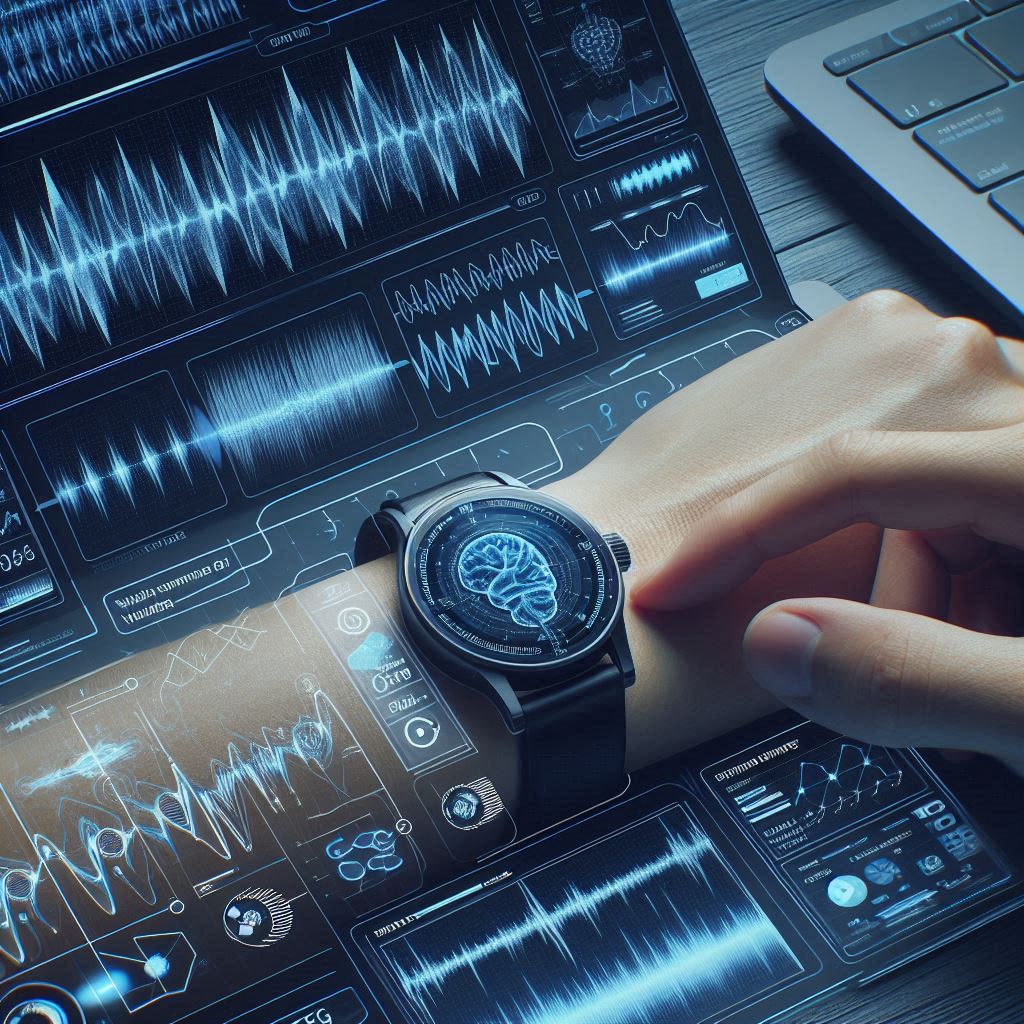
Drop in the archive the device portal produced and every recording lands in one common format, so an Empatica session, a Garmin export and a clinical EDF are processed on the same clock and compared on the same axes. Heart rate variability, electrodermal activity, sleep and circadian rhythm, spectral power, event related potentials and connectivity are all a recipe step away, and what you did to one recording replays across the rest of the cohort. Wear time is found and excluded before anything is measured, ectopic beats are corrected once and the correction count is reported, and where a method does not fit the data the workbench says so.
Our products use machine learning and large language models where they earn their place, and never as a black box. Analytics Workbench tunes every learner inside the cross validation folds, reports per class recall rather than accuracy alone, and explains each prediction; repeated measures are flagged before a p value is reported and multiple testing is corrected. Imaging Workbench admits a model only after converting it to a single verifiable runtime and benchmarking it against its own reference dataset, with the license and any caveat disclosed on the model itself. STUDYPRO's retrieval augmented reporting works over your own protocols and literature, and every claim it makes carries its citation. Research Workbench takes the same discipline further upstream: its literature review and research foundation are written sentence by sentence from your own library, and a sentence with no citation behind it is deleted before you ever see it. The Methods section is written from the recorded analysis and nothing else, so a step that was never run cannot appear in it.
Seventy EEG channels on one time base, six wearable signals on one clock with experiment labels overlaid, topographies at any instant, Bland-Altman and Kaplan-Meier plots with their intervals, and study dashboards for enrollment, recording compliance, adverse events and budget burn. A scan in Imaging Workbench carries its AI segmentation as an adjustable overlay and its detections as boxes counted automatically by class, both reviewable in place. Research Workbench lays out papers, evidence and claims as one navigable research graph, recentring on whatever node you inspect next. Every figure is interactive in the browser and exports at publication resolution, alongside the CSV, Excel, FIF, EDF, BrainVision, EEGLAB and BIDS outputs that keep your data in the tools your team already uses.
Our Principles
Our product philosophy is built around scientific trust rather than black-box automation. Where a method does not fit the data, the software says so rather than returning a number that looks plausible.
Preprocessing and inference are exposed, recorded and exportable, never hidden behind a summary.
The analysis history travels with the file rather than disappearing behind a result.
Trial, EEG, wearable and biomarker data share a study context across every product.
Repeated measures and multiple testing are explicitly handled, not left for the researcher to catch.
Researchers keep their data: every product exports to CSV, Excel and the specialist formats statisticians already use.
Automated interpretation names its sources and is constrained by the data supplied, never by a black box.
Who It Is For
Physiological recordings are study data in Novasyne, not attachments. That matters most to the teams below.
Research institutes and hospital departments running their own studies, who need GCP aligned workflows without an enterprise procurement cycle.
Principal investigators who want one place for consent, visits, adverse events, budgets and the recordings the protocol collects.
Translational neuroscience and wearable validation programs comparing devices, cohorts and conditions on the same axes.
Specialist teams who need repeatable analysis across many recordings, an audit trail that outlives the study, and open exports for the sponsor.
Products
Wearable Devices Supported
EEG Formats Read And Written
Industry Demonstrations